Eco-friendly cleaning products sit in an unusual position: they attract skepticism from two opposite directions at once. Conventional cleaning advocates question whether they actually work. Green living advocates question whether they’re green enough. Both sides generate myths, and both kinds of myths make it harder for households to make clear-eyed decisions about what they put in their homes.
Below are five of the most persistent myths about eco-friendly cleaners — examined directly, without softening the answers in either direction.
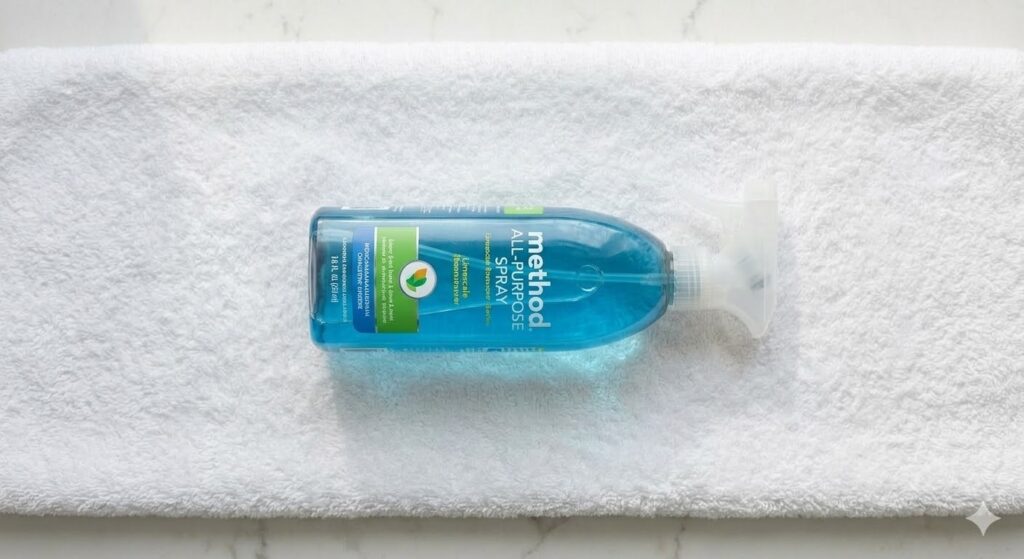
Myth 1: Natural cleaners can’t kill bacteria — you need bleach
Plant-based and eco-friendly cleaners are too gentle to do anything meaningful against bacteria. Real disinfection requires bleach or other harsh chemical agents. Anything else is just moving germs around.
THE REALITY:
This myth conflates two separate processes: cleaning and disinfecting. They are not the same thing, and confusing them leads to both overuse of harsh disinfectants and underestimation of what plant-based cleaners actually do.
Cleaning — the mechanical removal of dirt, grease, and surface contamination — also removes the vast majority of bacteria and viruses on a surface. Studies consistently show that thorough cleaning alone reduces microbial load by 90 percent or more on most household surfaces. Plant-based surfactants accomplish this through the same physical mechanism as any other surfactant: they surround and lift contaminants, which are then removed when you wipe or rinse the surface.
Disinfecting is a separate, higher-bar process. An EPA-registered disinfectant kills a defined percentage of specific pathogens within a specific contact time, under controlled conditions. This level of intervention is appropriate after handling raw meat, during active illness in the household, or in medical settings. It is not necessary — and arguably counterproductive — as a daily routine for kitchen counters, bathroom sinks, and living room surfaces.
Bleach and ammonia-based disinfectants are effective tools for specific high-risk situations. They are not superior everyday cleaners. For routine household cleaning, a plant-based cleaner that removes surface contamination thoroughly does the job that actually needs doing.
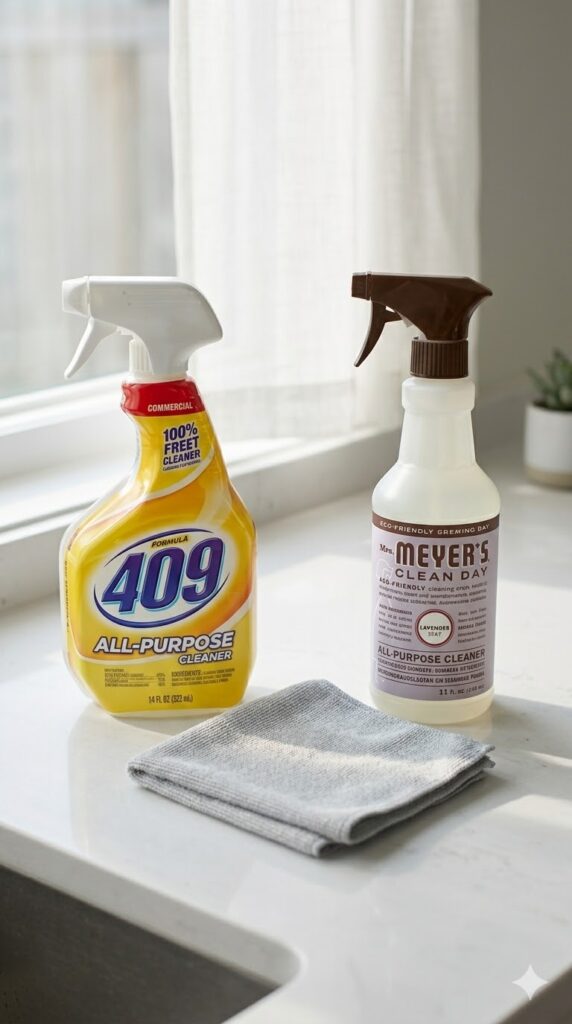
Myth 2: If it doesn’t smell like chemicals, it’s not working
A cleaner that smells like lavender or lemon can’t possibly be doing serious cleaning. Real cleaning products have a distinct chemical smell — that’s how you know they’re working.
THE REALITY:
The association between chemical smell and cleaning effectiveness is a learned expectation, not a chemical reality. It developed over decades of marketing for products whose active cleaning agents happened to be pungent — ammonia, bleach, solvent-based degreasers. The smell became a proxy for effectiveness in consumer perception, even though the two have no causal relationship.
Surfactants — the molecules that actually do the work of lifting grease and suspending dirt — have no inherent smell. A surfactant derived from coconut oil functions through the same physical chemistry as a petrochemical surfactant. The cleaning mechanism is identical. What differs is the feedstock and the byproducts of production, not the performance on your stovetop.
The chemical smell associated with conventional cleaners is often a byproduct of solvents, preservatives, or synthetic fragrance added to the formula — not evidence of cleaning power. Some of those ingredients serve functional purposes. Others are simply there because decades of conditioning have made consumers associate the smell with effectiveness. A cleaner that smells like basil and rinses clear is not less effective than one that makes your eyes water. It may simply have fewer ingredients whose primary contribution is the smell.
Myth 3: Eco cleaners are just regular cleaners in green packaging
Greenwashing is everywhere. Most products that claim to be eco-friendly or plant-based are conventional formulas with a new label and a higher price tag. The green claims are marketing, not chemistry.
THE REALITY:
Greenwashing is real, and the skepticism that drives this myth is legitimate. Unregulated terms like “natural,” “non-toxic,” and “eco-friendly” appear on products with no meaningful formulation difference from conventional alternatives. This is a documented problem in the cleaning product category specifically.
The myth goes wrong in treating greenwashing as universal. There are verifiable standards that separate genuinely different products from marketing rebrands. EPA Safer Choice certification requires that every ingredient in a product meet safety criteria for human health and environmental impact — it is not self-reported and cannot be purchased. EWG Verified applies a similar ingredient-by-ingredient review. Products holding these certifications have demonstrably different formulations from conventional alternatives, not just different labels.
The practical tool is ingredient transparency. Brands that publish full ingredient lists — not just active ingredients, but the complete formula including fragrance components and preservatives — are making their formulations auditable. Brands that use vague terms like “cleaning agents” or “fragrance” without further disclosure are not. The difference between a genuinely reformulated eco product and a greenwashed conventional one is visible in the ingredient list, if the brand publishes one. If they don’t, that absence is itself informative.
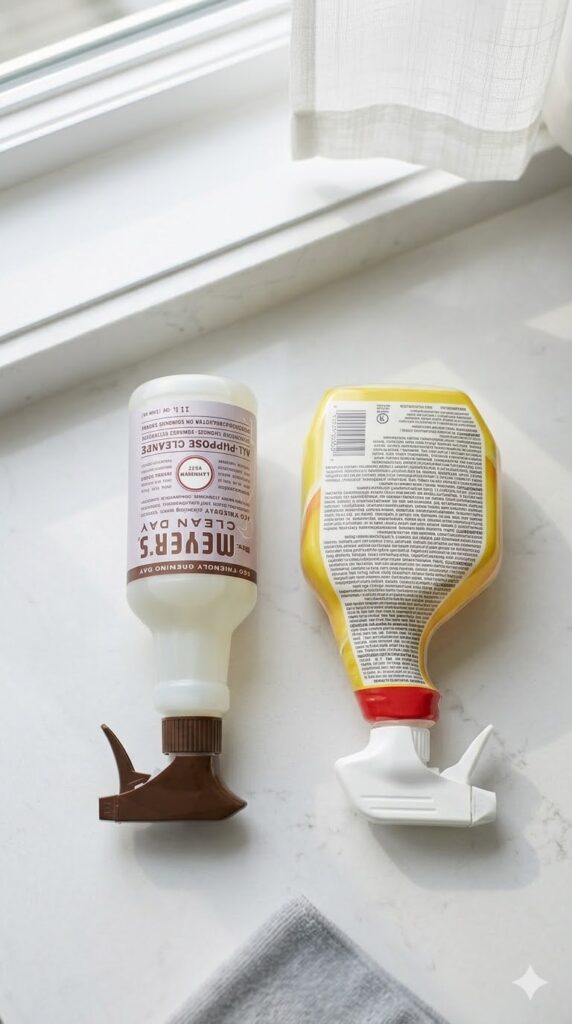
Myth 4: Natural fragrance is safe for everyone
Synthetic fragrance is the problem. Natural fragrance — essential oils, botanical extracts — is inherently safer and can’t cause the same reactions that synthetic fragrance does.
THE REALITY:
Natural fragrance is not universally safe, and the assumption that “natural” means “hypoallergenic” causes real problems for people with fragrance sensitivities.
Essential oils are complex chemical mixtures containing dozens of individual compounds. Many of those compounds are known allergens — limonene from citrus, linalool from lavender, eugenol from clove and cinnamon are all common sensitizers that appear on standard dermatological allergy panels. A product containing lavender essential oil contains linalool regardless of whether that linalool was synthesized in a lab or extracted from a plant. The molecule is identical, and the immune system responds to the molecule, not its origin.
Fragrance sensitivity — whether to synthetic or natural fragrance — is an immune response that can develop after repeated exposure even in people with no prior history of allergies. It tends to worsen with continued exposure once established. For people who have developed fragrance sensitivity, the relevant question is not “is this fragrance natural?” but “does this product contain the specific compounds I react to?”
Fragrance-free and unscented are also not the same thing. Fragrance-free means no fragrance ingredients were added. Unscented means a masking fragrance may have been added to neutralize the product’s natural smell. For people with true fragrance sensitivity, fragrance-free is the appropriate standard — and that applies to naturally fragranced products as much as synthetically fragranced ones.
Myth 5: Eco-friendly products cost too much to be practical
Green cleaning products are a luxury. They cost significantly more than conventional alternatives, and the price difference isn’t justified by meaningful performance gains.
THE REALITY:
The sticker price comparison — one bottle of Method versus one bottle of a conventional all-purpose cleaner — frequently favors the conventional product. The cost-per-use comparison tells a different story for a significant portion of the eco-friendly market.
Concentrated formulas change the math substantially. A concentrated cleaner sold in a smaller bottle at a higher price may yield two to four times as many uses as a ready-to-use conventional product at a lower price. Method’s concentrated multi-surface refills, Branch Basics concentrate, and similar products are specifically designed around this model. When the comparison is cost per cleaned surface rather than cost per bottle, the gap narrows considerably and sometimes reverses.
Multi-purpose design is a second factor. A single eco-friendly all-purpose cleaner that genuinely works across kitchen surfaces, bathroom surfaces, and general household use replaces multiple category-specific conventional products. Fewer products, even at higher individual prices, can produce lower total cleaning spend.
The honest summary: premium eco products at full price, used as directed, are competitive in cost-per-use terms with mid-range conventional alternatives. They are not competitive with discount conventional products purchased in bulk. For households where budget is the primary constraint, the most practical approach is identifying one or two high-quality concentrated eco products for the highest-contact surfaces, and making trade-offs elsewhere.
What This Means in Practice
Eco-friendly cleaning products work — with the same caveat that applies to any product category: quality varies, and claims require scrutiny. The myths above share a common root: they treat the category as uniform, when the actual range runs from genuinely reformulated, certified products to greenwashed conventional formulas with new labels.
The useful questions are specific. Does this product hold a third-party certification? Does the brand publish a full ingredient list? What is the cost per use, not per bottle? Does the fragrance profile match what my household can tolerate? Those questions produce better purchasing decisions than either uncritical enthusiasm or blanket skepticism.
At Natural Cleaning Experts, we select products based on those criteria — not on front-label claims. Our eco-friendly cleaning approach uses EPA Safer Choice and plant-based formulas across our Texas service area, chosen for what they actually contain and how they actually perform. If you’d like to know more, reach out for a free consultation.